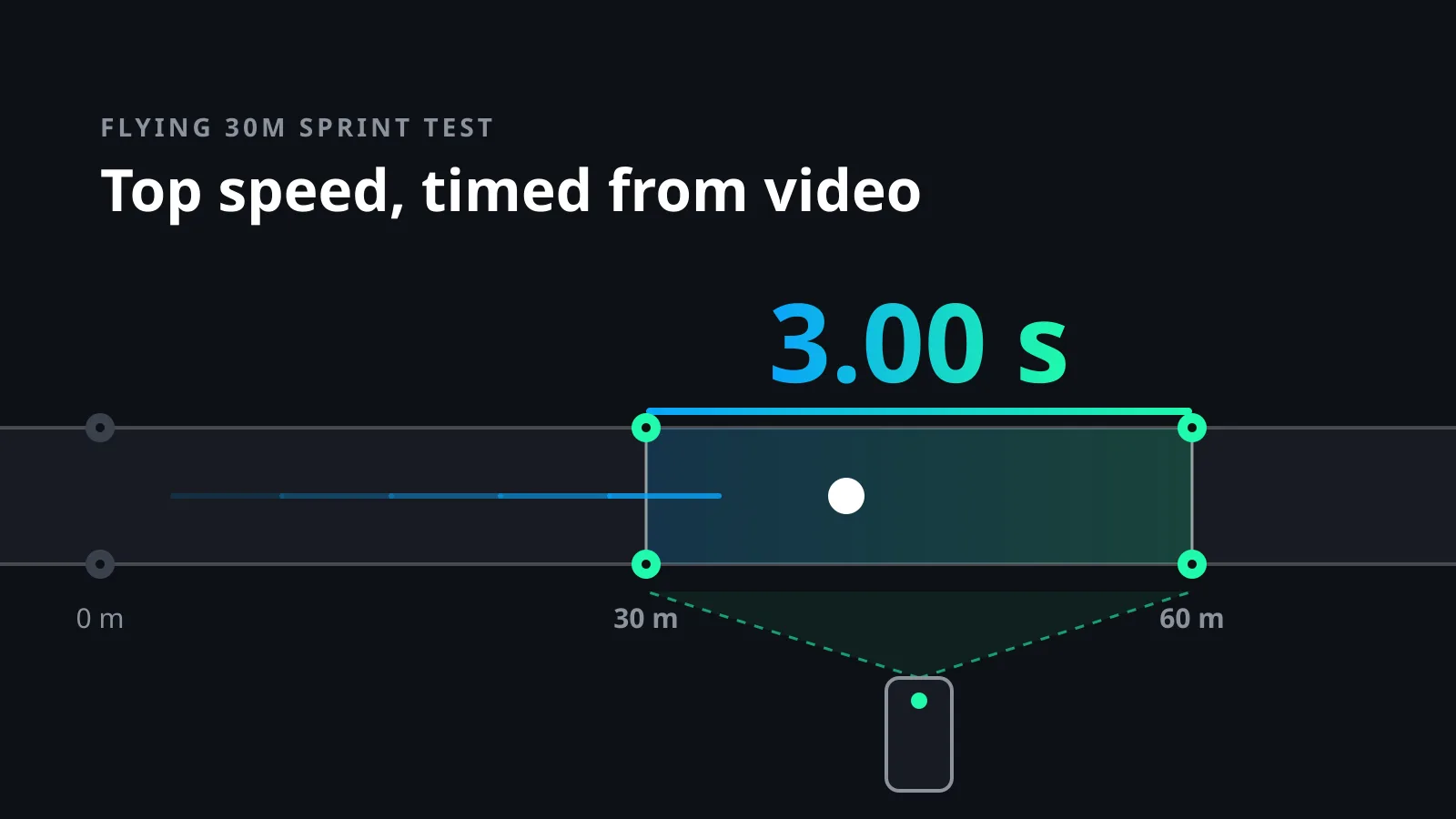
Sprinting
Flying 30m Sprint Test: How to Set It Up and Time It With Video
Set up a flying 30m sprint test, time it from phone video to the hundredth, and avoid the camera mistake that quietly adds a metre to every run.
10 min read
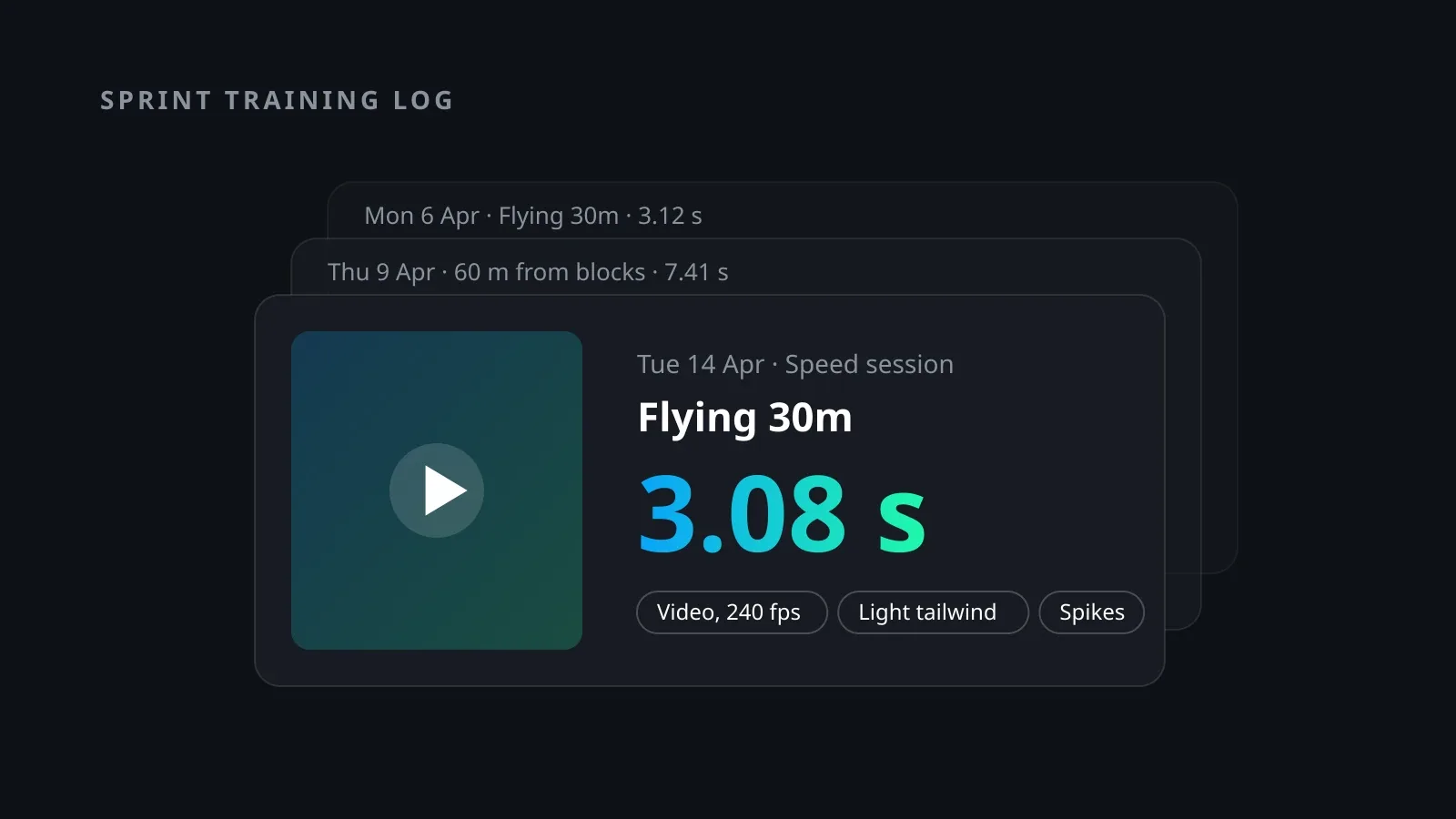
A training log is the story of your season. Read back in June, it should tell you what worked in January. For sprinters it often tells the wrong story, because the most common log entry is a distance, a time and nothing else.
Sprint times are tiny numbers. A season of hard work can be worth a tenth of a second or less. Change the stopwatch, the start or the wind, and the time moves by more than that. This guide covers what to record for every rep so your numbers can be compared, and why a short video of each rep makes the whole log more useful and more honest.
A distance runner's log adds up kilometres. A sprinter's log is a handful of short, flat-out reps with long rests, and progress comes in hundredths of a second. A review of sprint testing by Haugen and Buchheit, published in Sports Medicine, puts it plainly: beyond a certain level, athletes can train for years to improve a few hundredths over short distances. The same review found that the way a sprint is started and timed can change the result by many times more than that.
Their most striking example is about the start. A 40 m time of 4.4 seconds from a standing start, with the clock started by a sensor under the front foot, is a worse performance than 5.0 seconds from blocks with a starting gun. That is the same distance and 0.6 seconds apart, and the slower time is the better run. If your log does not say how each time was taken, entries like these cannot be compared.
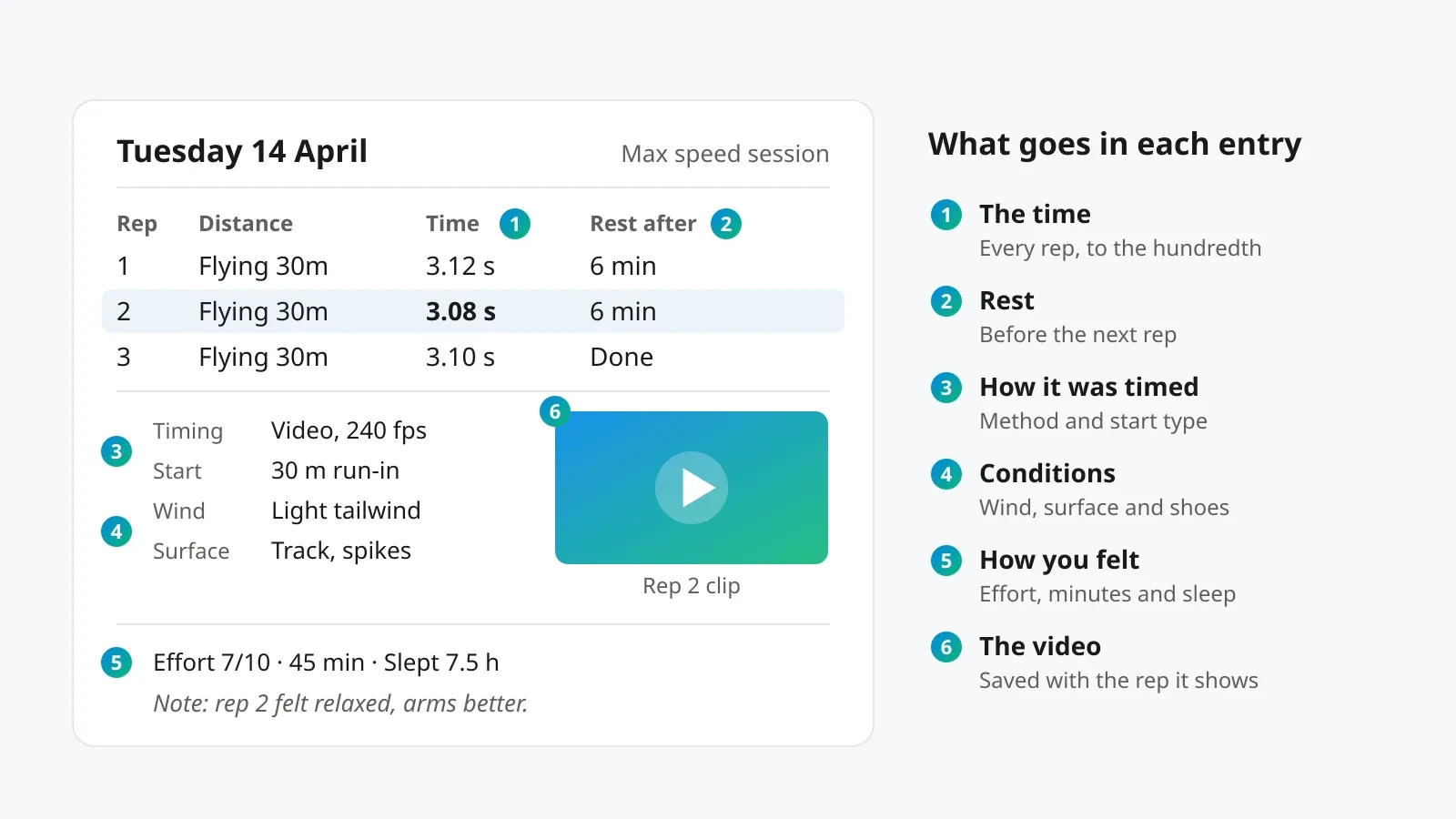
Most logs skip this part, and it is the part that decides whether two times can be compared at all.
Film the reps that matter most: test reps, the best rep of a session, and anything you want a coach to look at. More on why below.
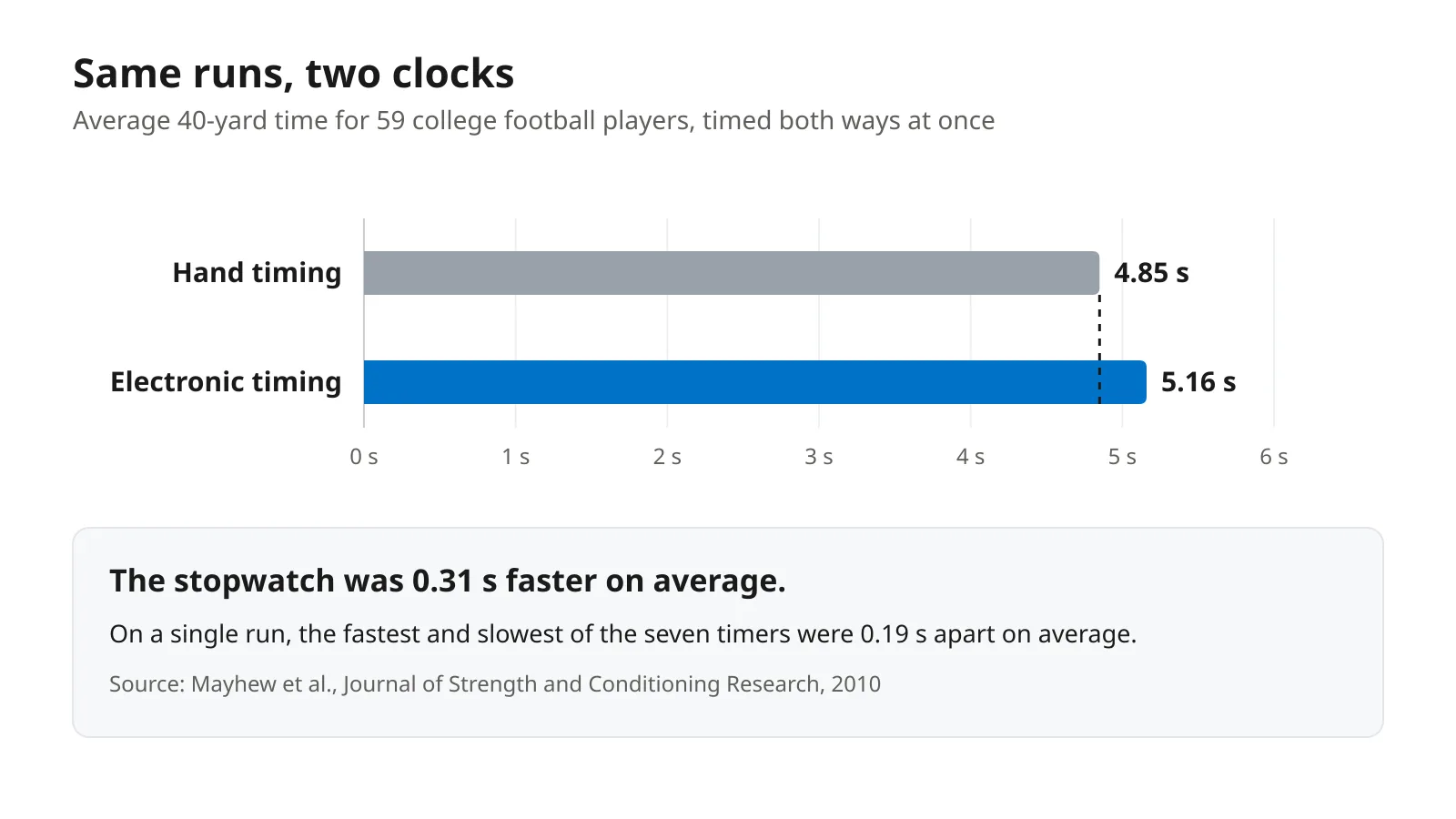
Hand timing is the biggest trap. In one study, seven experienced timers used stopwatches on 59 college football players running 40 yards, while electronic timing ran at the same time. Hand times averaged 4.85 seconds against 5.16 seconds electronic, so the stopwatches were about 0.31 seconds faster. The timers did not agree with each other either. On a single run, the gap between the fastest and slowest timer averaged 0.19 seconds.
Part of the gap is reaction time, because the person with the stopwatch has to react to the start. The World Athletics rules for hand timing round every hand time on the track up to the next tenth, so 10.11 is recorded as 10.2.
So keep each timing method on its own line. Never put a hand time and a gate time in the same chart, and never compare this year's gate times with last year's stopwatch times. A correction of 0.2 seconds has traditionally been used to convert hand times, but treat that as a rough guess, not a fix.
A number in a notebook is a claim. A number with a video next to it can be checked. That difference matters more than it sounds, for four reasons.
A clip filmed in slow motion can be timed frame by frame, and research shows that phone video can match timing gates closely when it is set up right. Our guide to the flying 30m test and timing it from video walks through the method step by step. Even if the time came from a stopwatch, the clip lets you time it again later.
Your best rep and your worst rep look different: posture, arm action, how your foot meets the ground. With the clip next to the number, you can see what a fast rep looks like for you, instead of guessing from memory.
Clips sent in a chat get buried under newer messages. Clips saved with the rep they belong to stay easy to find, together with the time and the conditions. Feedback can then point at one specific rep from one specific day.
A big drop in your times is exciting, and a little suspicious. Was the wind behind you? Did someone start the watch late? With the video, you can answer that. Your good days stay good, because you can show what happened.
Logging is half the job. Every few weeks, sit down with your log and ask a few questions:
On test days, run two or three trials instead of one. The review shows that the random error in a measurement shrinks as you average more trials, so a small real change becomes easier to trust.
| Option | Good at | Weak at |
|---|---|---|
| Paper notebook | Fast, no battery, easy to use at the track | No charts, no video, hard to search |
| Spreadsheet | Charts, sorting, any fields you want | Clips live somewhere else, and typing on a phone is slow |
| Notes app and camera roll | Always with you | The number and the video are split, and clips get lost among other photos |
| A log that keeps video with each result | Number, clip and conditions stay together, and charts build themselves | You set up your events once before the first session |
The last row is what Sploore was made for. You log a rep as a result: the time, the unit, the date, tags for things like timing method and wind, and the clip. Each event gets its own history and progress chart, and your personal bests stand out without any extra work.
A good sprint log is not complicated. Record the rep, how it was timed, the conditions and how you felt, and keep the clip with it. If you jump as well as sprint, the same habits work for tracking your long jump progress too. And if you want the time and the video in one place from your next session, give Sploore a try.
Your journey. Your progress. Track what matters to you.
Download SplooreSet up a flying 30m sprint test, time it from phone video to the hundredth, and avoid the camera mistake that quietly adds a metre to every run.
10 min read
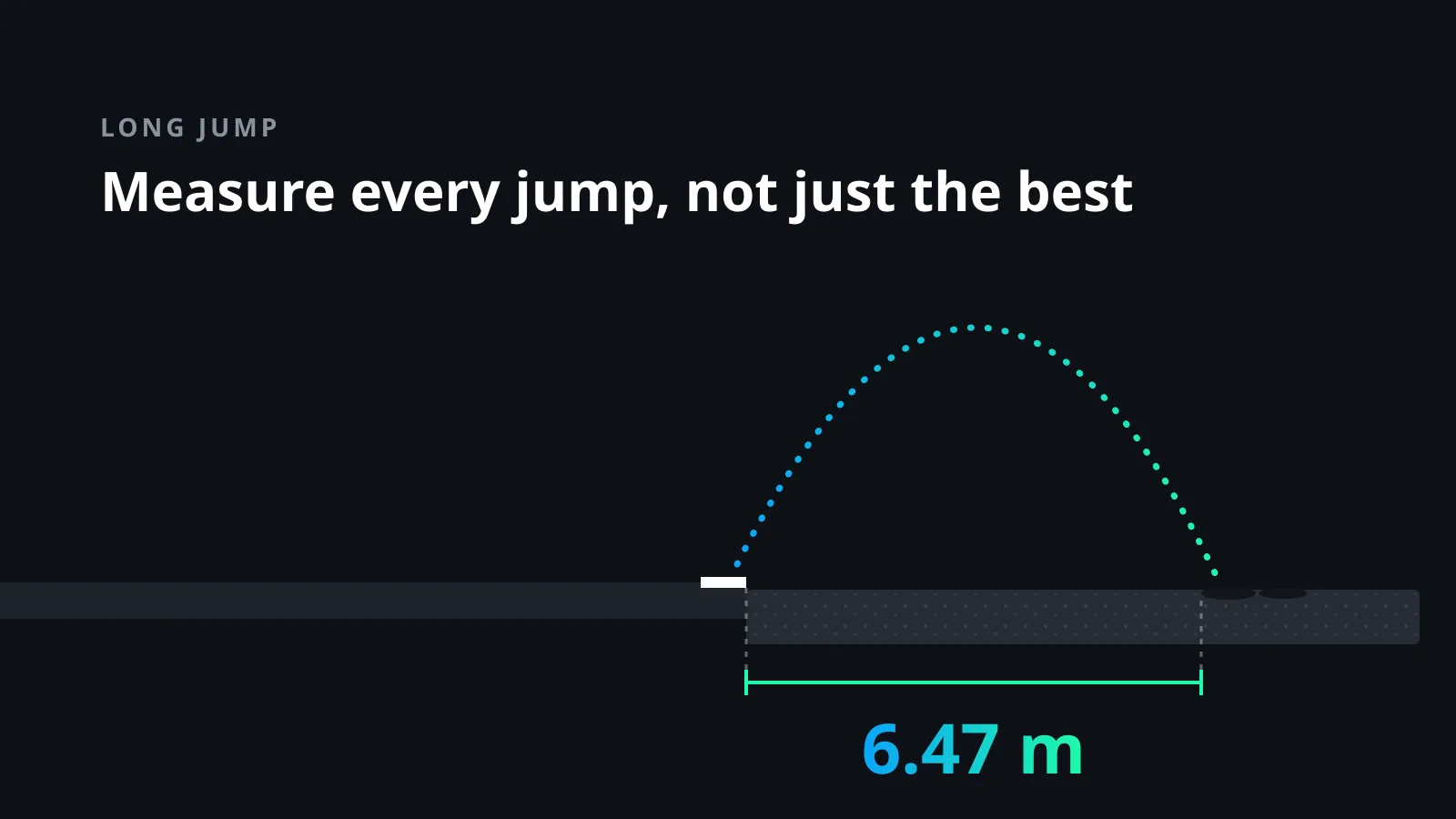
Your season best hides most of your progress. Learn to measure every jump, track board accuracy and wind, and see real long jump gains over a season.
8 min read
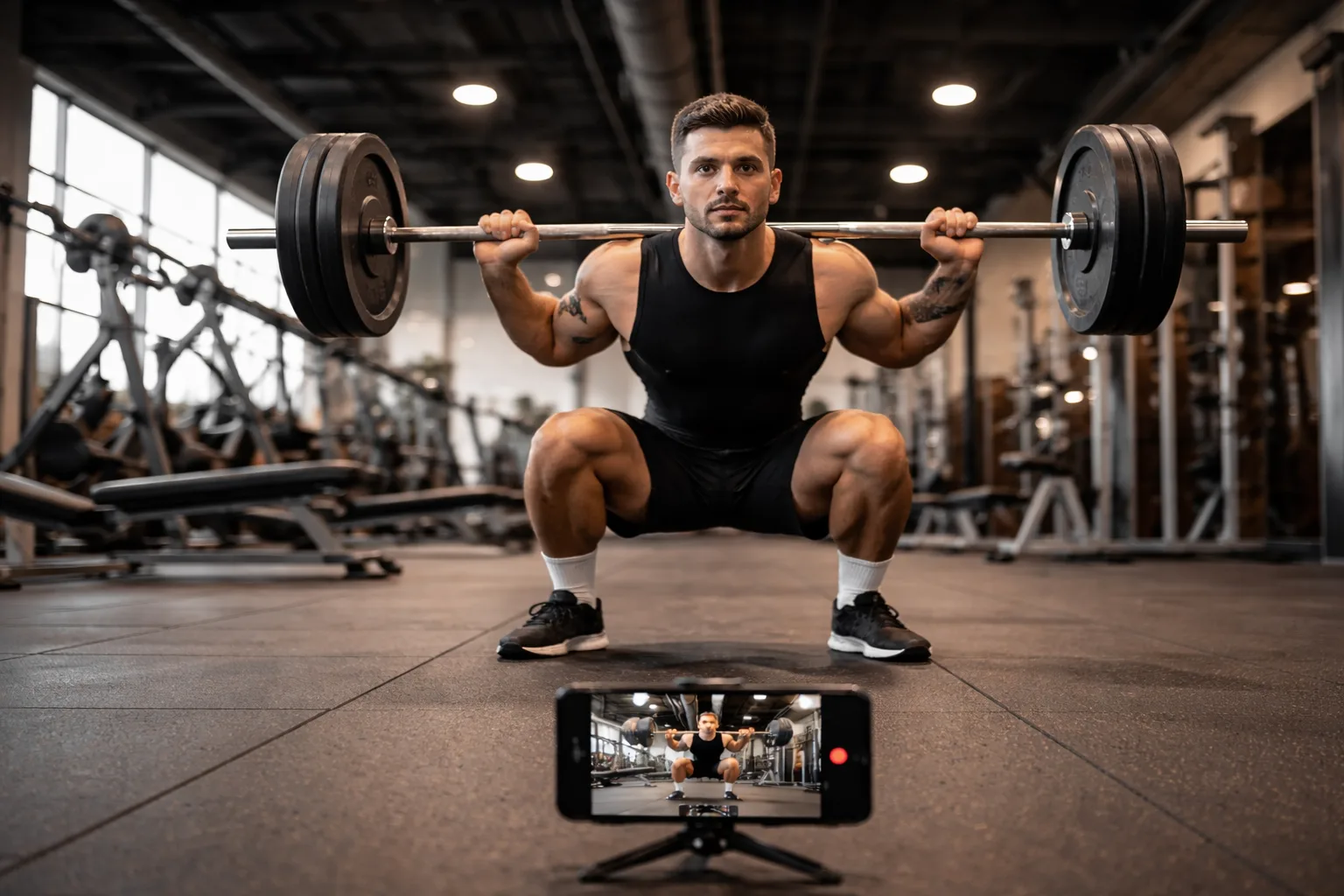
Workout videos get ignored because they show a moment, not progress. Here is why training clips get low views, and how measurable results change that.
3 min read